Exercitation ullamco laboris nis aliquip sed conseqrure dolorn repreh deris ptate velit ecepteur duis.
Close
Get in touch
[contact-form-7 id="5" title="Sidebar Newsletter"]Why Rich People Still Make Poor Financial Decisions?
 Articles
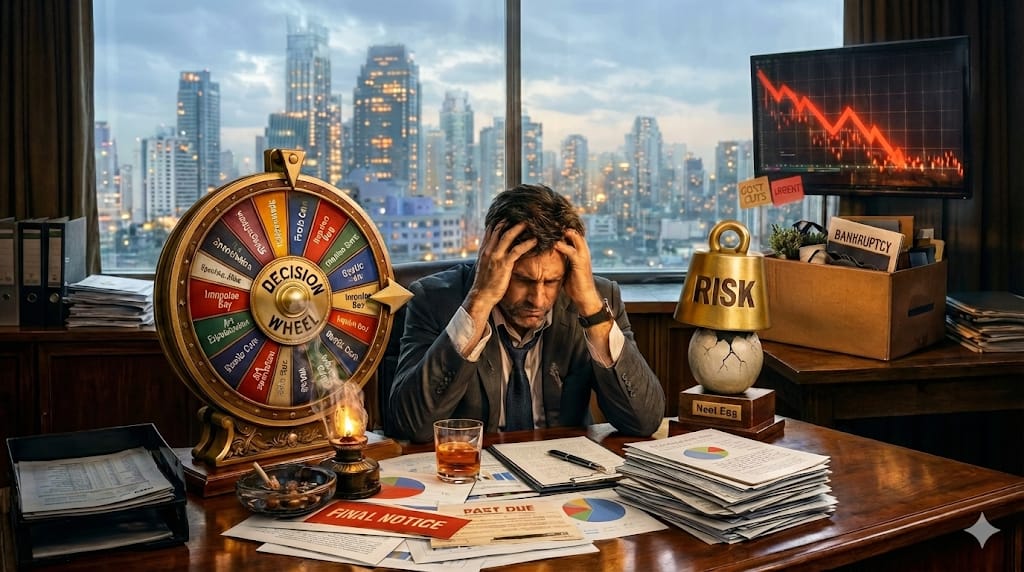
We often assume that wealth is proof of financial intelligence. After all, building a large fortune usually requires sharp thinking, discipline, and strong decision-making skills. Yet, in real life, some of the most damaging financial mistakes are made by people who are already wealthy. This is not because they lack knowledge or lack access to expert advice. It happens because wealth does not eliminate human emotions. In fact, it often strengthens them.
Real story: A successful Business owner, whom I will call Mr. Ram, once shared his story during a private consultation. Over two decades, he had built a thriving business and personal wealth worth several crores. Confident in his judgment, he invested most of his surplus in real estate within one city, equity in companies from his own industry, and a few high-return opportunities recommended by friends. For several years, everything worked in his favour. His net worth grew steadily and his confidence grew even faster.
Then market conditions changed. Property prices stopped rising. His industry faced regulatory challenges. Stock values dropped. Suddenly, nearly seventy percent of his wealth was exposed to one sector. Mr. Ram did not lose money because he was careless or unintelligent. He lost financial balance because his wealth lacked proper structure. His story is not unique. It quietly repeats itself in many wealthy families.
One of the biggest reasons rich people make poor financial decisions is because of overconfidence. Success naturally builds self-belief. Entrepreneurs and professionals who have built wealth often start believing that the same instincts that helped them succeed in business will also protect them in investments. Unfortunately, business and markets operate under very different rules. Business rewards control and leadership. Markets reward patience, discipline, and diversification. When confidence replaces strategy, risk quietly increases.
Another powerful force is emotion. Wealth does not remove fear or greed. It only changes the scale at which they operate. Rich investors still panic when markets fall and feel excitement when others make fast money. They still become emotionally attached to certain assets and find it difficult to admit mistakes. The difference is that emotional decisions at higher levels of wealth carry far larger consequences.
Familiarity also plays a major role. Many wealthy individuals prefer investing in what they understand best like their own industry, their own city, or opportunities within their social circle. This feels logical and comfortable. However, comfort is not the same as safety. When too much wealth is concentrated in a few familiar areas, even strong fortunes become fragile. True protection comes from diversification, not familiarity.
Wealth also creates an illusion of control. Access to information, experts, and exclusive opportunities slowly makes people feel that they are in command of outcomes. Yet no individual controls interest rate cycles, political events, currency movements, or market psychology. Smart wealth owners eventually realise that the goal is not to predict everything, but to prepare for anything.
Social influence plays an equally silent role. Even among HNIs, investment decisions are often shaped by conversations within elite circles. When friends speak about high returns, exclusive deals, or fast profits, it creates subtle pressure to participate. In wealthy communities, herd behaviour often wears a premium label. And when such decisions fail, the losses are rarely discussed openly.
Another common issue is owning assets without architecture. Many wealthy individuals hold impressive portfolios, but lack a clear structure connecting those assets. They may not have proper asset allocation, estate planning, succession clarity, tax efficiency, or risk alignment. As a result, their wealth becomes a collection of investments rather than a well-designed system. Wealth without structure is powerful, but directionless.
This problem becomes even more serious when wealth moves across generations. Globally, studies show that most wealthy families lose their wealth by the third generation. This rarely happens because of market crashes. It happens because families fail to prepare the next generation to handle wealth responsibly. Money can be transferred easily. Financial wisdom cannot. Legacy requires education, communication, and thoughtful planning.
Many HNIs believe that having multiple advisors means they are well guided. In reality, what they often need is not more advice, but better coordination. There is a difference between advisors and professionals. Advisors discuss products and opportunities. Professionals design systems. Families that preserve wealth across generations usually work with professionals who see the complete picture like business, investments, tax, risk, family goals, and future responsibilities.
The truth is simple and human. Rich people do not make poor financial decisions because they are careless. They make them because they are human. Wealth does not remove bias. It only increases its financial impact.
Over time, the wisest wealthy families make a powerful shift in thinking. They stop asking what to invest in next and start asking how their wealth should serve their life, their family, and their future. This shift transforms wealth from a number into a purpose.
Wealth is not defined by how much one earns or owns. It is defined by how wisely it is structured, protected, and aligned with long-term values. In a world full of noise, speed, and opportunity, true richness lies not in taking bold risks, but in making calm, balanced, and timeless decisions.